Job marketHow the UAE job market actually works
Referrals · agencies · boardsNo fees to candidatesBasic vs allowancesHire in Sept & Jan
Most jobs in the UAE come from three places: people who refer you, agencies paid by the employer, and job boards like LinkedIn. Nobody can charge you a fee to get a job. If an agency asks for money, walk away.
Salaries are monthly and tax-free. They are split into basic and allowances. The split matters. Gratuity, leave pay and overtime are all based on the basic. Hiring is busy in September and January. It is slow in Ramadan and summer. Your MoHRE contract is the legal one. The offer letter is only proof of the promise.
Reading an offerReading an offer: basic, allowances and what they hide
Basic drives gratuityNotice 30–90 daysProbation ≤ 6 monthsCheck WPS history
Two offers of AED 10,000 can be worth very different money. A basic of AED 7,000 pays 40% more gratuity, leave and overtime than a basic of AED 5,000 with big allowances. Look at the notice period (30 to 90 days) and probation (up to 6 months).
Check if insurance covers your family, if a flight home is included, and if there is a non-compete clause. Ask if the company pays on time through WPS. Late payers are easy to find on expat forums. Run the basic salary through the gratuity calculator so you know what five years there is worth.
Got an offer? See what 5 years there is worth.
Free gratuity check. No sign-up. 30 seconds.
Switching employers without a ban
Serve notice · no banSettlement in 14 daysProbation: 30 or 14 daysAlign start date to last day
Since 2022, changing jobs is normal and legal. You serve your notice, you get your final pay within 14 days, and you move to the new visa. In probation the rules are tighter: 30 days' notice to join another UAE employer, or 14 days to leave the country.
The old one-year ban for resigning is gone. The only ban left is for leaving in probation without notice. Your new job cannot start your permit until the old one is cancelled. Plan your start date around your last day. Get your exact last working day here.
Non-competesNon-competes, references and your reputation
Max 2 yearsMust be limited in scopeNot if terminated without causeExperience letter is your right
A non-compete clause only works if it is limited: at most 2 years, a set place, and a set kind of work. It must protect a real business need. If the employer ended your contract without cause, they usually cannot use it. A court will not stop you from earning a living.
Your employer cannot keep your passport or certificates. They cannot hold back your experience letter. The UAE is small and people talk. Leave cleanly: serve notice, do a handover. Ask for the experience letter in writing before your last day. Check the job title and dates match your contract.
Skills that payLearning, certificates and the skills that move your salary
PMP · CIPD · ACCA · cloudArabic opens gov roles1 unpaid job-hunt day/weekAsk for the training budget
UAE employers pay for certificates that are known across the region: PMP and PRINCE2 for projects, CIPD for HR, ACCA and CMA for finance, Google and Meta for marketing, and any cloud or data certificate in tech. Arabic is not needed for most private jobs, but it opens government roles that pay more.
During notice you get one unpaid day a week to look for work. Many contracts include a training budget that nobody uses. Ask for it. The Tutorii lessons below teach the rights, systems and habits that change what you earn here, in simple English.
Second incomeA second income, legally
Part-time permit via MoHREFreelance permitReferral income = not employmentOwn-name UAE account
Extra income is allowed, with rules. A part-time job with another employer needs a part-time permit from MoHRE. The second employer applies. Your main employer does not need to agree. Freelancing needs a freelance permit from a free zone or MoHRE.
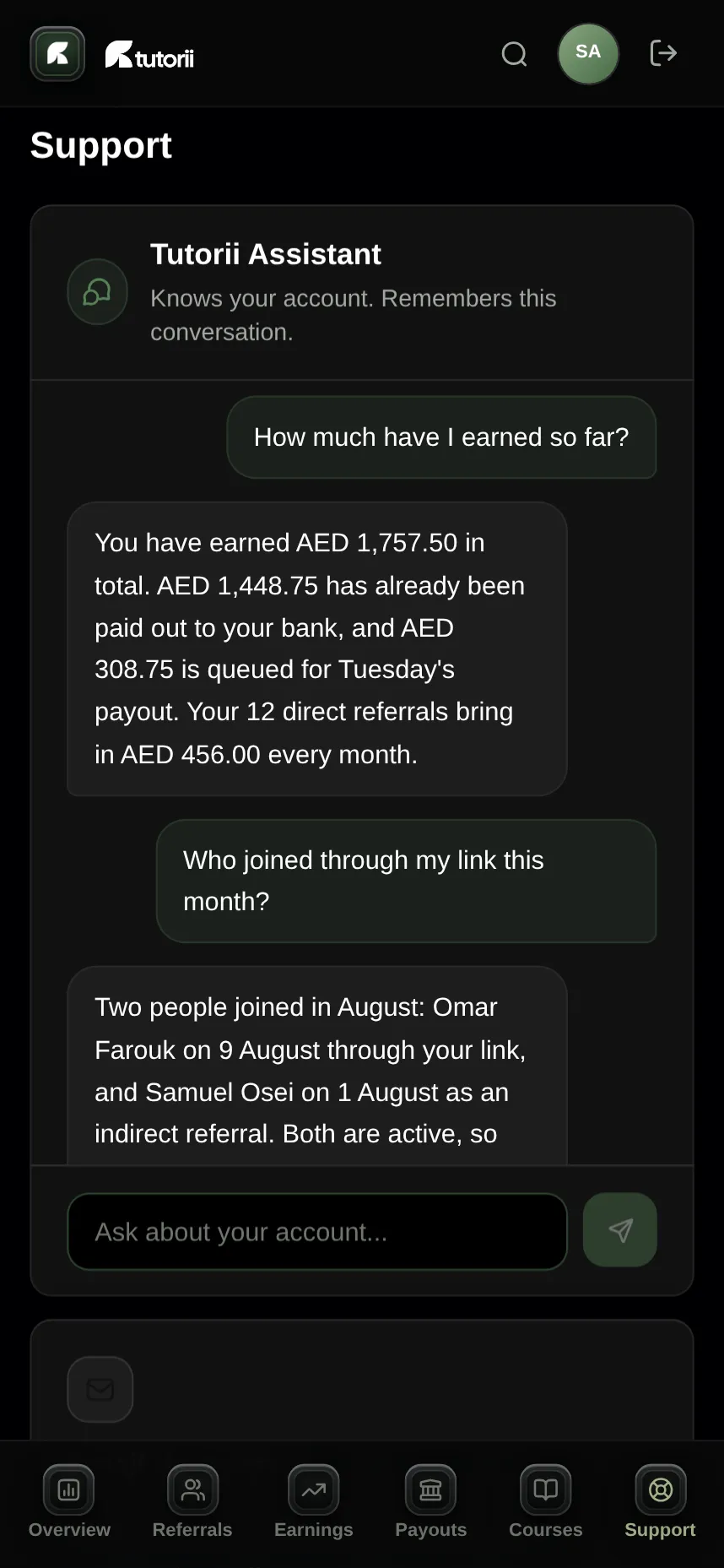
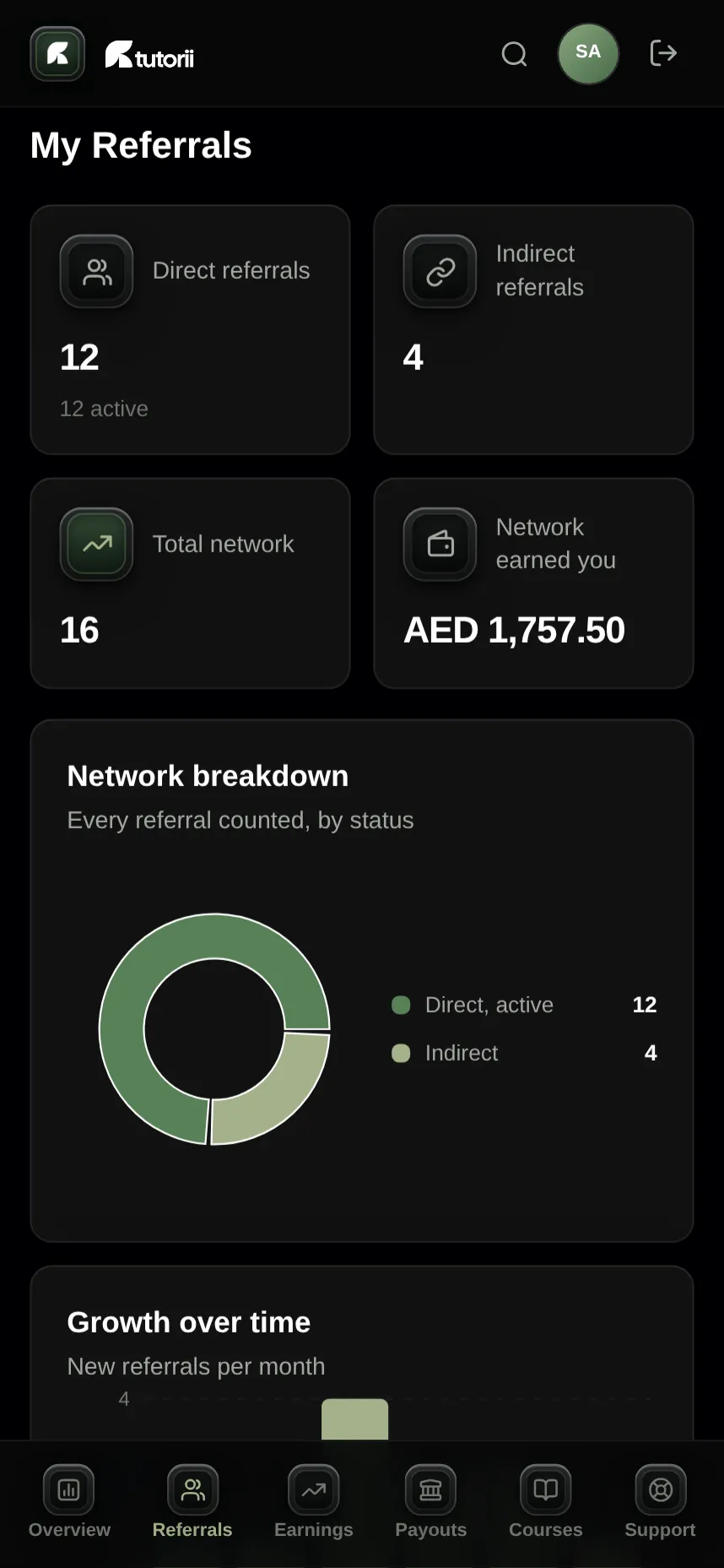
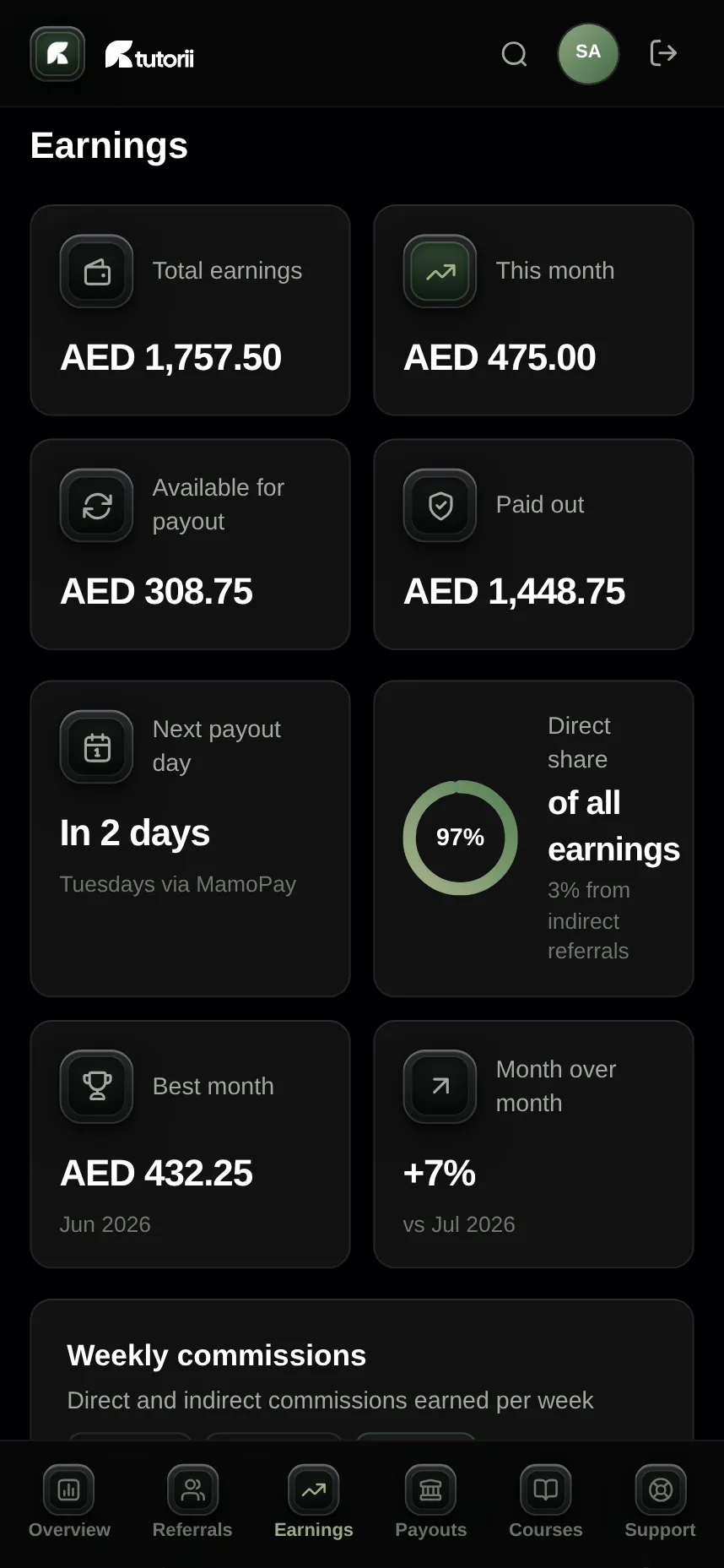
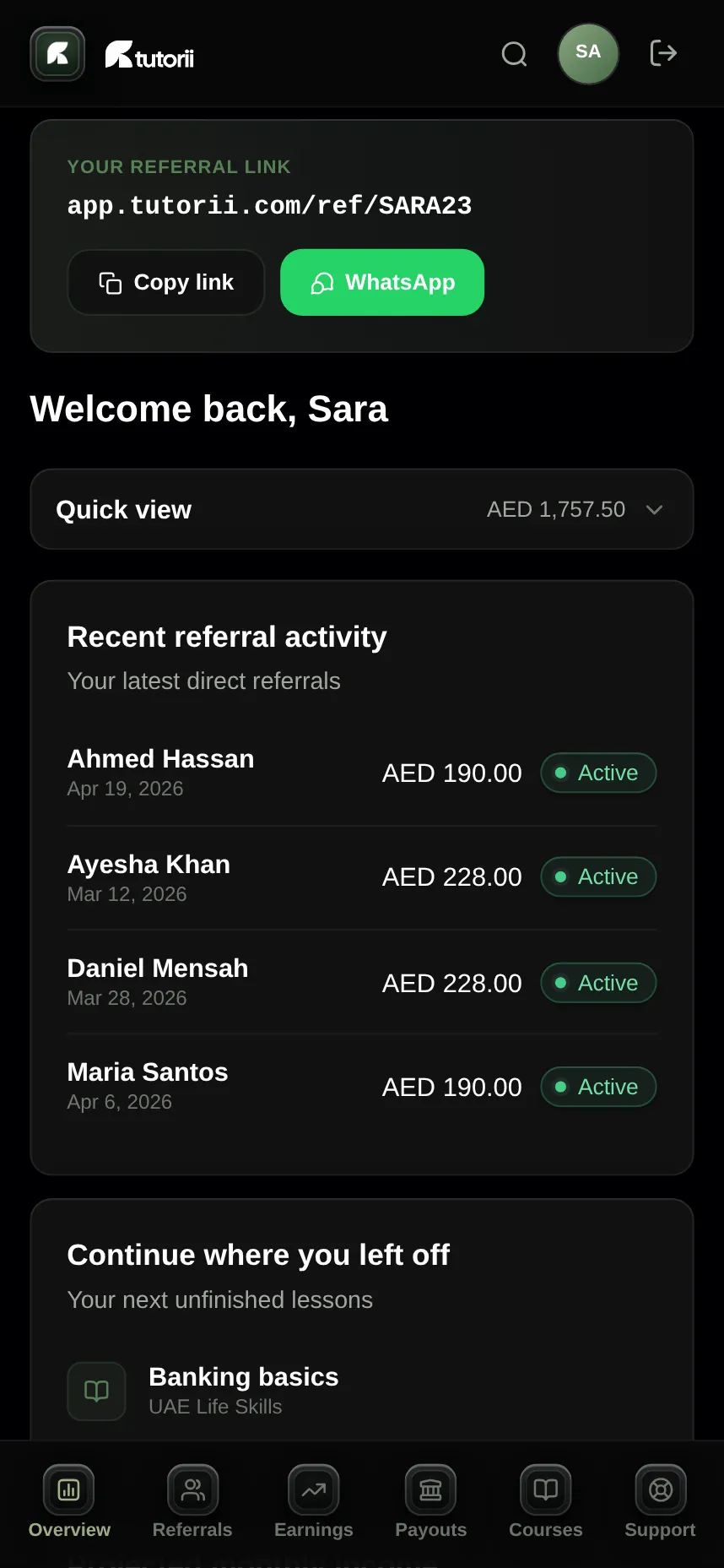
Referral income from a platform, including Tutorii's direct and indirect referral programme, is paid by the platform. It is not a job. Still, check your contract for any rule about outside work. Keep the money in a UAE bank account in your own name. Keep records. That keeps it clean.

.svg)



.svg)